



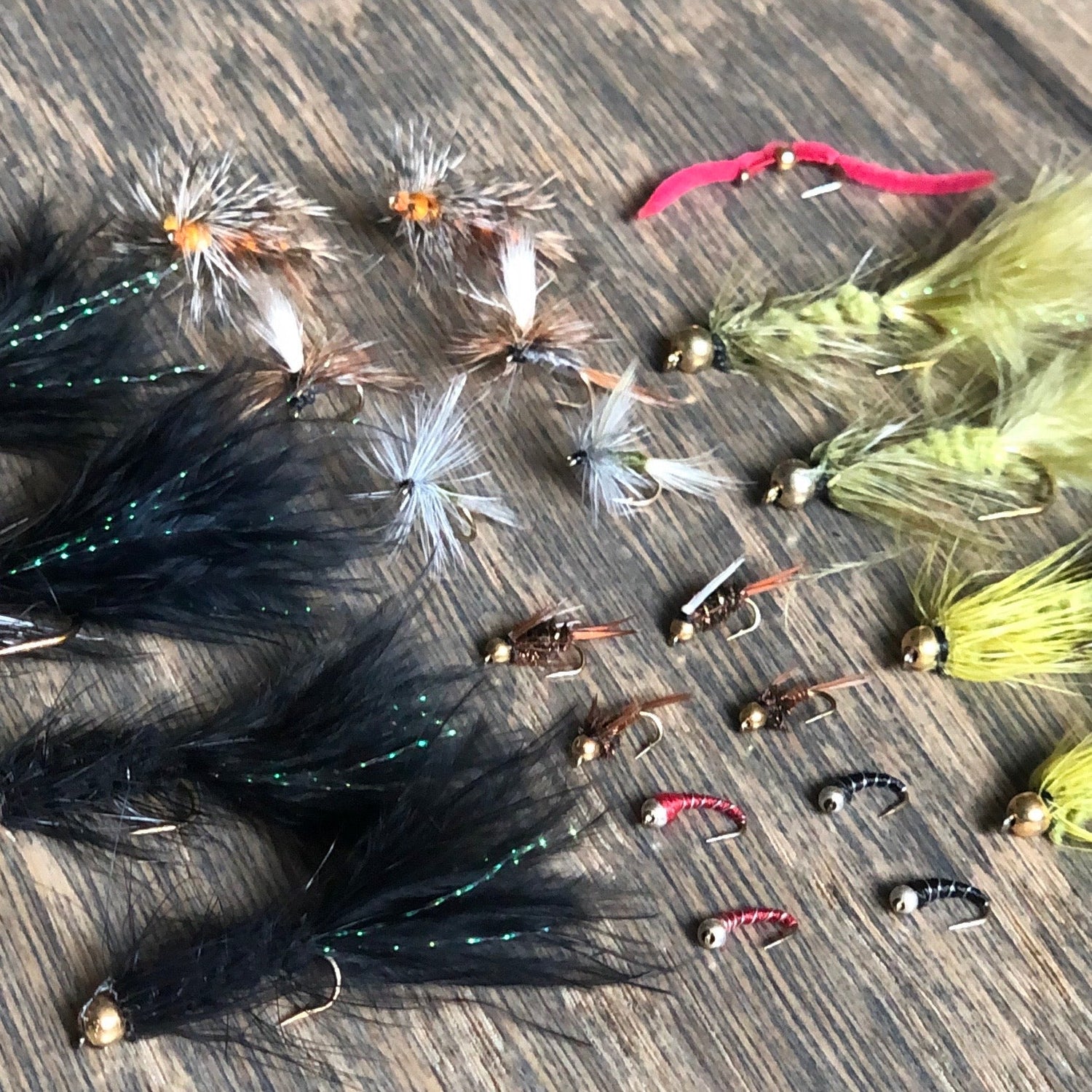
After years of running Pescador on the Fly and a lifetime chasing trout, I've learned that a handful of fly fishing flies do the heavy lifting almost everywhere you go. Some patterns have an almost magical ability to attract fish; others end up as reminders of optimistic experiments. Here are my top 10 picks — the tried-and-true champions every angler should carry in their fly box. These staples produce almost anywhere, from spring creeks to tailwaters to high mountain lakes.
The 10 fly fishing flies every fly box needs
1. Parachute Adams

A true classic that fools fish worldwide, the Parachute Adams is the Swiss Army knife of flies. It blends into almost any mayfly hatch seamlessly.
2. Woolly Bugger

In olive, black, and white, the Woolly Bugger is the fly equivalent of keeping bread, milk, and eggs in the kitchen. Essential? Absolutely. Fun to fish? You bet.
3. Pheasant Tail Nymph

This nymph is the quietly confident angler at the party — it doesn't need to be the center of attention, but it's often the smartest fly in the box.
4. Elk Hair Caddis

The Elk Hair Caddis is for the days trout want their meal served on the surface with a little flair. It floats well and rides riffles beautifully.
5. Zebra Midge

Black-and-red Zebra Midges are the secret weapon when trout are playing hard to get — proof that good things come in small packages.
6. Griffith's Gnat

For the days trout are sipping tiny midges, the Griffith's Gnat is your go-to. It convinces fish you're serving gourmet when it's really just a cluster of midges.
7. Miracle Midge

The Miracle Midge is for those moments when you need a small miracle because the fish are being particularly snobbish about their diet.
8. Squirmy Worm

Available in red, brown, and pink, the Squirmy Worm is what happens when trout have a sweet tooth. It's the gummy bear of the fly fishing world.
9. Prince Nymph

The Prince Nymph is royalty in the nymph kingdom — the charming guest who never fails to impress a hungry trout.
10. Hare's Ear Nymph

A fly box without a Hare's Ear Nymph is like a library without the classics — versatile, dependable, and it makes you look like you know what you're doing even on the days you're not so sure.
Build your fly box the easy way
When you're stocking these fly fishing flies, look for bead head and tungsten bead head patterns tied on jig hooks — they sink to the strike zone fast and ride hook-point-up for better hookups and fewer snags. Want a shortcut? Our curated fly packs and essential six-packs put proven producers in your box without the guesswork, and every rod-and-reel combo includes a Free Bonus Accessory Package (see listing for details) to get you started. Here's to tight lines and a fly box worth bragging about.
Understanding Flies for Fly Fishing: The Foundation of Success
Every angler who picks up a fly rod eventually learns that choosing the right flies for fly fishing makes the difference between a slow day and a memorable one. Unlike conventional lures, fly patterns imitate the natural food sources trout, bass, and other gamefish feed on throughout the season. The flies you tie to your tippet need to match not just the species in the water, but the specific insects, baitfish, or crustaceans those fish are actively eating.
Fly selection isn't about carrying hundreds of patterns. It's about understanding what fish eat in your local waters and when they eat it. A well-stocked fly box for a Colorado trout stream looks different from one built for Florida redfish or Montana spring creeks. The core principle remains the same: observe the water, match what you see, and present it naturally.
Dry Flies: Fishing the Surface
Dry flies float on the water's surface and imitate adult insects that have emerged from their aquatic stage. These patterns work best during hatches when trout rise to feed on mayflies, caddisflies, or midges drifting overhead. Classic patterns like the Adams, Elk Hair Caddis, and Parachute Adams cover most situations, while attractor patterns like the Royal Wulff trigger strikes even when no specific hatch is happening.
The key to dry fly fishing is presentation. Your fly needs to drift drag-free at the same speed as the current, appearing as natural as the real insects around it. Use floatant to keep your fly riding high, and watch for the visual strike—one of fly fishing's most exciting moments. Early morning and evening hours typically offer the best dry fly action, though overcast days can extend surface feeding throughout the day.
Match your dry fly size to what's hatching. A size 16 Blue Winged Olive works during spring mayfly emergences, while larger size 12 or 14 caddis patterns shine in summer. Terrestrial patterns like hoppers, ants, and beetles become essential from mid-summer through fall when land insects end up in the water.
Nymphs: Where Fish Feed Most
Trout and other gamefish do roughly 80 percent of their feeding below the surface on nymphs—the immature, aquatic stage of insects. Nymph patterns sink and drift along the bottom where stoneflies, mayflies, and caddis larvae live among the rocks. Pheasant Tails, Hare's Ears, and Prince Nymphs are proven producers that belong in every fly box.
Nymphing requires different techniques than dry fly fishing. Most anglers use a strike indicator (essentially a bobber) to detect subtle takes, since fish often inhale and reject nymphs quickly. Weight your rig with split shot or use weighted flies to get down to the feeding zone. Dead-drifting your nymphs through runs, pools, and pocket water puts flies where fish hold and feed.
Vary your nymph depth based on water conditions. In high, fast water after runoff, fish hug the bottom and you need more weight. During low, clear conditions, lighter rigs and smaller nymphs work better. Carry nymphs in sizes 12 through 20, with darker patterns for stoneflies and lighter tan or olive shades for mayflies and caddis.
Streamers: Targeting Aggressive Fish
Streamers imitate baitfish, leeches, and other larger prey that predatory fish hunt. These flies for fly fishing produce the biggest fish because they trigger an aggressive feeding response. Woolly Buggers, Clouser Minnows, and articulated patterns like the Drunk and Disorderly move through the water with lifelike action that bass, pike, and large trout can't resist.
Streamer fishing is active and physical. You cast across or downstream, then strip the fly back with short pulls to create swimming motion. Vary your retrieve speed and pause occasionally—strikes often come when the fly stops moving. Fish streamers along banks, through deep pools, and around structure where predators ambush prey.
Color matters with streamers. Olive, black, and white patterns work in most conditions, while brighter colors like chartreuse or pink excel in stained water. Size your streamers to match local baitfish—smaller 2-3 inch patterns for trout streams, larger 4-6 inch flies for bass and pike. Spring and fall are prime streamer seasons when fish feed aggressively before and after winter.
Wet Flies and Emergers: The In-Between Zone
Wet flies and emergers fish just below the surface, imitating insects transitioning from nymph to adult or drowned adults washing downstream. Soft hackle patterns, traditional wet flies like the Leadwing Coachman, and emerger patterns fill the gap between nymphs and dry flies. These patterns shine during complex hatches when fish feed at multiple depths.
The swing technique works well with wet flies. Cast across stream and let the current sweep your fly downstream in an arc while it rises toward the surface. This motion imitates emerging insects and often triggers strikes from fish that ignore dead-drifted flies. Emergers fished in the film—that thin layer where water meets air—can be deadly when trout are sipping insects stuck in their shucks.
Timing matters with these patterns. Fish emergers when you see rises but your dry flies get refused. Switch to wet flies when a hatch is ending and drowned insects drift downstream. These transitional patterns often save the day when nothing else works.
Building Your Fly Selection
Start with a dozen proven patterns in multiple sizes rather than buying one of everything. A basic trout box should include Parachute Adams and Elk Hair Caddis in sizes 14-18, Pheasant Tail and Hare's Ear nymphs in sizes 14-18, a few Woolly Buggers in olive and black, and some midge patterns for winter fishing. Add local favorites based on where you fish most.
Organize flies by type and size in a quality fly box that keeps hooks sharp and materials dry. Foam inserts work better than magnetic bases for small flies. Carry a streamside fly box with your most-used patterns and keep backup supplies at home or in your vehicle. Replace flies that lose their shape or get chewed up by fish—a ratty fly doesn't fish well.
Quality matters more than quantity. Well-tied flies with sharp hooks and durable materials catch more fish than cheap imports that fall apart after one trout. When you're ready to expand your selection, investing in quality fly fishing gear ensures your patterns perform when it counts. Match your flies to your local waters, learn a few core patterns thoroughly, and you'll catch fish consistently.
Matching Flies to Water and Season
Different waters demand different fly selections. Freestone streams with pocket water and riffles fish well with attractor dries and heavily weighted nymphs. Spring creeks with slow, clear water require smaller flies, lighter tippets, and precise imitations. Tailwaters below dams often have year-round midge hatches and consistent flows that keep fish feeding on tiny patterns.
Seasonal changes drive fly selection as much as location. Spring brings runoff and high water—fish nymphs deep with stonefly patterns and streamers. Summer offers the best dry fly fishing with terrestrials and evening caddis hatches. Fall sees fish feeding heavily before winter, making it prime time for streamers and larger nymphs. Winter fishing focuses on midges and small nymphs in slow, deep water where fish conserve energy.
Water temperature affects what fish eat and how they feed. Cold water slows metabolism, so fish prefer smaller meals and slower presentations. Warm water increases feeding activity but also lowers oxygen levels, concentrating fish in faster, oxygenated runs. Adjust your fly size, weight, and retrieve speed to match current conditions rather than fishing the same way year-round.
Success with flies for fly fishing comes from observation and adaptation. Watch the water, note what insects are active, and choose patterns that match the size, color, and behavior of natural food sources. Keep a fishing journal noting what worked when and where—patterns emerge that make you a better angler over time. The right fly presented well beats a perfect cast with the wrong pattern every time.


1 comment
Tom Bridges
As a newbie to fly fishing do you have a “starter” set suggestion or offering? I live in MS but spend a lot of time in Western NC seeing my kids and grands. Suggestions? Thanks!
Leave a comment
All comments are moderated before being published.
This site is protected by hCaptcha and the hCaptcha Privacy Policy and Terms of Service apply.