




There's a myth in fly fishing that you have to spend $500, $700, even $900 to get a rod that actually performs — and that anything cheaper is a wet noodle you'll want to replace in a season. It isn't true anymore. Here's how to find the best fly rod under $300, and what separates a great value rod from a cheap one.
What a fly fishing rod under $300 actually buys you in 2026
Let's put real numbers on it, because most articles on this won't. Here's what our own value line costs, and what comes in the box:
| Rod only | Complete combo | |
|---|---|---|
| Price | $175 (3–6wt) · $200 (8wt) | $250 |
| What's included | Rod, rod tube, rod sock | Rod, tube, sock, reel, fly line & backing installed, plus a free accessory pack |
| Weights | 8' 3wt · 8'6" 4wt · 9' 5wt · 9' 6wt · 9' 8wt | Same |
| Ready to fish? | You'll need a reel and line | Yes — line is spooled and installed before it ships |
That's the part worth sitting with: a complete outfit — rod, reel, line, backing, and the accessories — lands at $250, with the line already spooled up so you're not standing in a shop paying someone to do it. You're not scraping the ceiling of your budget to get there. You're comfortably under it, with money left for flies and gas.
What actually matters in a value rod
- The action. A good rod loads smoothly and recovers crisply so you can feel the cast. Price doesn't guarantee this — plenty of expensive rods are too stiff for everyday fishing, and plenty of affordable ones cast beautifully.
- The components. Quality guides, a comfortable cork grip, and a reel seat that won't loosen up. This is where the cheapest rods cut corners — and where a smart value rod doesn't.
- The warranty. Rods break. What matters is whether the company stands behind it and can get you a replacement section without a fight.
- Versatility. For most anglers, a 9-foot 5-weight is the one rod that does almost everything — trout, panfish, light bass — so it's the smartest place to put your money.
Why “affordable” doesn't have to mean “compromise”
The reason most quality rods cost so much isn't the materials — it's the markup as the rod passes through distributors, shops, and big marketing budgets before it reaches you. Sell directly to anglers instead, and you can put a genuinely good rod in someone's hands for a fraction of the price.
Here's the simplest way we know to say it: we have a $300 fly rod. Ours just costs $175, because we sell it to you directly. Same blank, same components, same lifetime warranty — we just took out the distributor, the shop margin, and the ad budget that gets baked into the sticker everywhere else. That's the entire difference. It isn't a cheaper rod, it's the same rod without the middlemen.
Our pick: the Econ 101
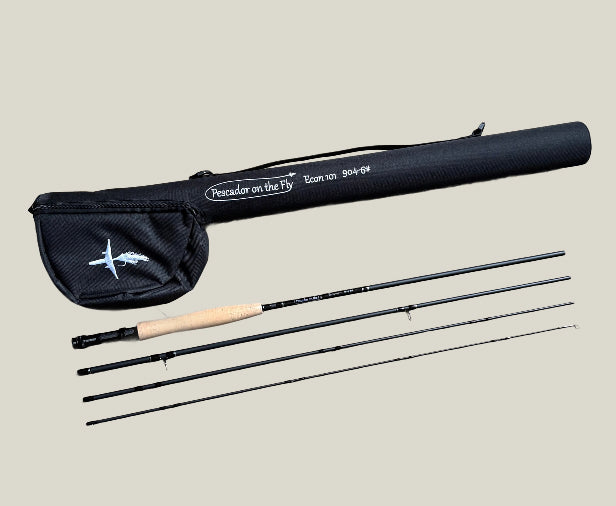
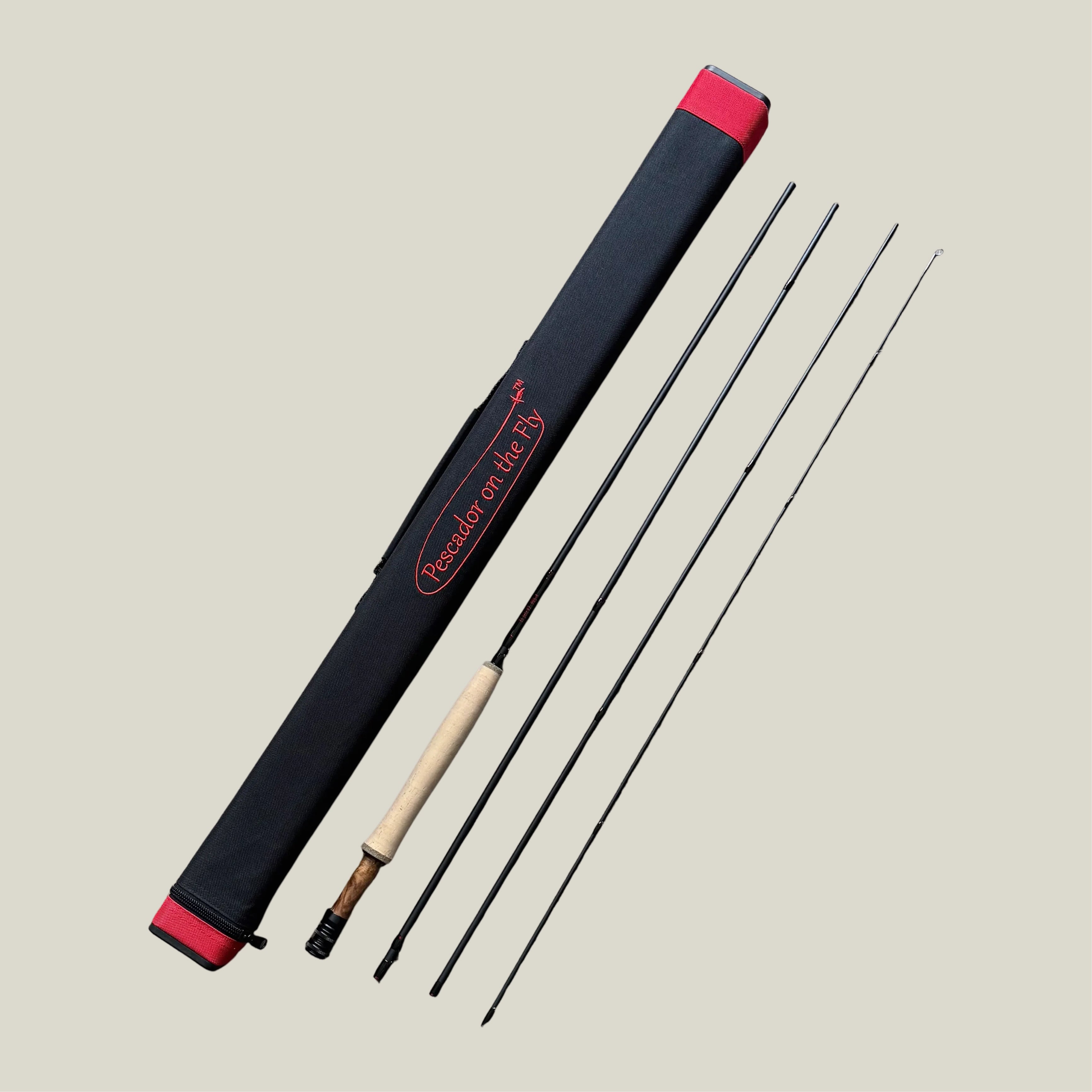
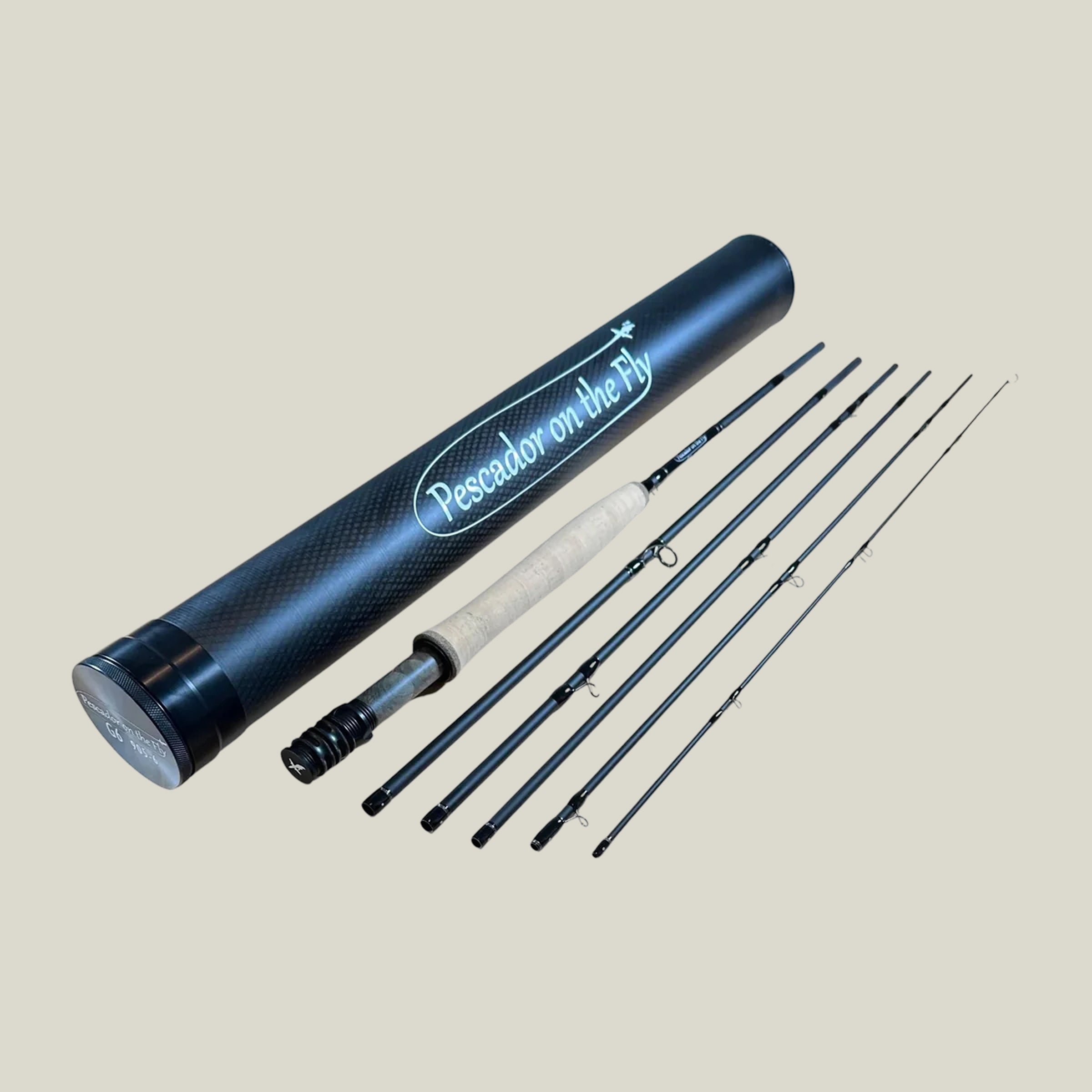
That's exactly why we built the Econ 101 series. It's our value line — real performance, quality components, and a rod that loads and casts like it costs a lot more, all at an entry-level price. You can get the rod on its own, or grab a complete combo that comes with a matched reel, fly line, backing, and a bonus fly and accessory pack — everything you need to walk down to the water and fish.
Which weight should you buy under $300?
If you're buying one rod, buy the 9' 5-weight. It's the rod that does almost everything — trout on most rivers, panfish, light bass — and it's the one you'll still be fishing in five years. Everything else is a specialty:
- 8' 3-weight: small creeks and brushy water, where a 9-footer is too much rod.
- 8'6" 4-weight: dry flies on smaller water.
- 9' 5-weight: the default. Start here.
- 9' 6-weight: wind, bigger flies, bigger trout, light bass.
- 9' 8-weight: bass, big streamers, and light saltwater like bonefish and redfish.
A quick word on the thing nobody mentions at this price: the warranty. Rods break — in car doors, in ceiling fans, in tailgates. What matters isn't whether the company promises the world, it's whether you can actually get a replacement section without a fight. Ours are covered for accidental damage, and that matters more on an affordable rod than an expensive one, because a $175 rod you can't fix is just a $175 rod you no longer own.
What about a fly rod under $200?
You can do it, and you don't have to drop to junk to get there. Our rod-only price is $175 for the 3, 4, 5, and 6-weights — that's the same rod, the same components, and the same warranty as the one in the combo, just without the reel and line. The 8-weight is $200.
The honest trade-off: a fly rod under $200 is a rod, not an outfit. You'll still need a reel, backing, fly line, and leader before you can fish it, and by the time you buy those separately you're usually past what the complete combo costs. So the rod-only makes sense in two situations — you already own a reel you like, or you're adding a second weight to a setup you've already got. If you're starting from nothing, the combo is the better buy, and it's still under $300.
What we'd steer you away from at this price is the $89 big-box kit. That's where you find the soft, hinging blanks, the plastic reel seats, and the line that cracks in a season — and it's the reason so many people try fly fishing once and decide they're bad at it. There's a real floor to what a good rod costs. It's just a lot lower than $500.
The bottom line
You don't have to spend a fortune to fish a rod you'll love. Look for a smooth action, solid components, and a company that backs the rod up — and put the money you save toward gas, flies, and time on the water.
Tight lines!
How to spot a fishing rod under $300 that won't let you down
Most buying guides skip the part that matters: how do you tell whether a rod in this price range is actually good, or just cheap? Here's what to look for before you buy.
First, check the ferrules — the joints where the rod sections connect. Wiggle them gently. A quality rod has tight, machined ferrules that seat cleanly with no play. Cheap rods feel loose or gritty, and that slop shows up in your cast as dead spots and wobble.
Second, flex the rod. A good blank recovers smoothly and stops cleanly when you shake it. If it keeps vibrating like a car antenna, that's a sign of poor materials or bad taper design. You'll feel that as slop in your loop and inconsistent distance.
Third, inspect the guides. They should be aligned perfectly down the spine of the rod, with clean wraps and smooth feet. Misaligned guides kill accuracy and create friction that robs distance. Run your finger along the wraps — if the thread feels rough or uneven, that's a shortcut someone took in production.
Finally, check the cork. A good grip is dense, clean cork with minimal filler. Cheap rods use composite cork or low-grade material that crumbles after a season. Your hand is on that grip all day — it matters more than most people think.
The hidden costs most anglers forget when buying a fishing rod under $300
Here's what catches people: the rod is $250, but you're not done spending. You still need a reel, line, backing, leader, tippet, and flies. By the time you're ready to fish, you're $150 over budget and wondering why no one mentioned it up front.
That's why a complete combo makes sense for most anglers. You know the total cost before you commit, the components are matched so they balance correctly, and the line is already installed so you're not paying a shop $30 to spool it or watching YouTube videos in your garage at midnight trying to figure out backing knots.
The other hidden cost is replacement sections. Rods break — car doors, ceiling fans, rocks you didn't see. A good warranty gets you a replacement tip or mid-section for $40 to $60. A bad one makes you buy a whole new rod. Ask before you buy, and get it in writing.
What fish you can realistically target with a fishing rod under $300
Let's be specific, because "trout and panfish" doesn't tell you much. Here's what a quality 5-weight in this price range actually handles, based on thousands of hours on the water with our own anglers.
Trout from 8 inches to 20 inches, in rivers and lakes. You'll land them cleanly, protect light tippet, and have enough backbone to steer fish away from structure. Panfish — bluegill, crappie, perch — where the rod is honestly more than you need, but it's pleasant and won't overpower small fish. Light bass in ponds and slow rivers, up to about three pounds, using poppers and small streamers.
Where it starts to struggle: big bass over four pounds in heavy cover, because you need more power to turn them. Saltwater species, unless you step up to an 8-weight and even then you're limited to smaller bones and schoolie stripers. Steelhead and salmon, where you want a 7- or 8-weight with a stiffer butt section.
The point is this: one good rod in this price range covers 80% of the fishing most anglers actually do. You don't need a quiver of specialty rods to catch fish — you need one solid tool and the time to learn it.
Why direct-to-angler pricing changes the fishing rod under $300 category completely
The traditional retail model adds 100% to 150% to the cost of a rod by the time it reaches you. The manufacturer sells to a distributor, the distributor sells to a shop, and the shop marks it up again to cover rent, staff, and inventory risk. A rod that costs $80 to build sells for $400 on the rack, and everyone along the chain takes a cut.
Sell directly instead, and you can offer the same rod for half the price — or offer a better rod at the same price. That's not theory. That's exactly how our Econ 101 series works, and it's why anglers keep asking us how we can sell a rod this good for $175 when everything else at this performance level costs $350 or more.
The answer is simple: we don't pay distributors, we don't stock shops, and we don't run ad campaigns during football games. We build a good rod, we sell it to you directly, and we keep the price honest. That's the entire model.
How to match a reel and line to your fishing rod under $300 without overspending
If you're buying the rod separately, here's how to match it without guessing or overpaying. First, the reel: it should balance the rod so the outfit feels neutral in your hand when you grip it just ahead of the reel seat. Too light and the rod feels tip-heavy and tiring. Too heavy and it feels like you're casting a fence post.
For a 5-weight rod, a reel in the 4.5- to 5.5-ounce range works well. You don't need a $300 reel to match a $200 rod — a quality reel in the $80 to $120 range does the job and leaves money for line and flies.
Second, the line: match the weight to the rod, and choose a taper that fits how you fish. A weight-forward floating line is the most versatile — it casts well, mends easily, and handles everything from dry flies to small streamers. Expect to spend $50 to $80 for a quality line that lasts multiple seasons.
Third, backing: 100 yards of 20-pound Dacron backing is standard for trout rods and costs about $10. Don't overthink it — it's insurance for the rare fish that runs you into the backing, and it fills the reel so your line doesn't coil too tightly.
Finally, leaders and tippet: start with a 9-foot tapered leader in 4X or 5X, and a couple spools of tippet in the same sizes. Budget $20 to $30 total. You'll replace tippet regularly as you fish, but leaders last a while if you don't abuse them.
The bottom line on buying a fishing rod under $300 in 2026
You don't need to spend $600 to get a rod that casts well, lands fish cleanly, and lasts for years. You just need to know what actually matters — action, components, warranty, and versatility — and buy from someone who prices honestly and stands behind their work. The gap between a great value rod and an overpriced one isn't performance anymore. It's just markup.


Leave a comment
All comments are moderated before being published.
This site is protected by hCaptcha and the hCaptcha Privacy Policy and Terms of Service apply.