



Much of what I know about the Blackfoot I learned on the water from my friend and guide Jake Hensley — Missoula Fly Guy (@missoulaflyguy). This guide leans on his hard-won local knowledge, a handful of my own trips, and the river’s own long history.
There’s no honest way to write about fly fishing the Blackfoot River without starting where most of us started: A River Runs Through It. Norman Maclean’s 1976 novella and Robert Redford’s 1992 film — the one with a young Brad Pitt shadow-casting in the Montana light — were set right here, in and around Missoula, on this river. I actually listened to the book on Audible across three flights on my way into Missoula for my first float. By the time I put the boat in, the Blackfoot already felt like a place I knew.
Maclean’s family moved to Missoula in 1909, and the film is often called the “big bang” of modern fly fishing — credited with drawing millions to the sport through the 1990s. Fish the Blackfoot today and you’re fishing living history. Here’s everything you need to plan a trip.
The Blackfoot at a Glance
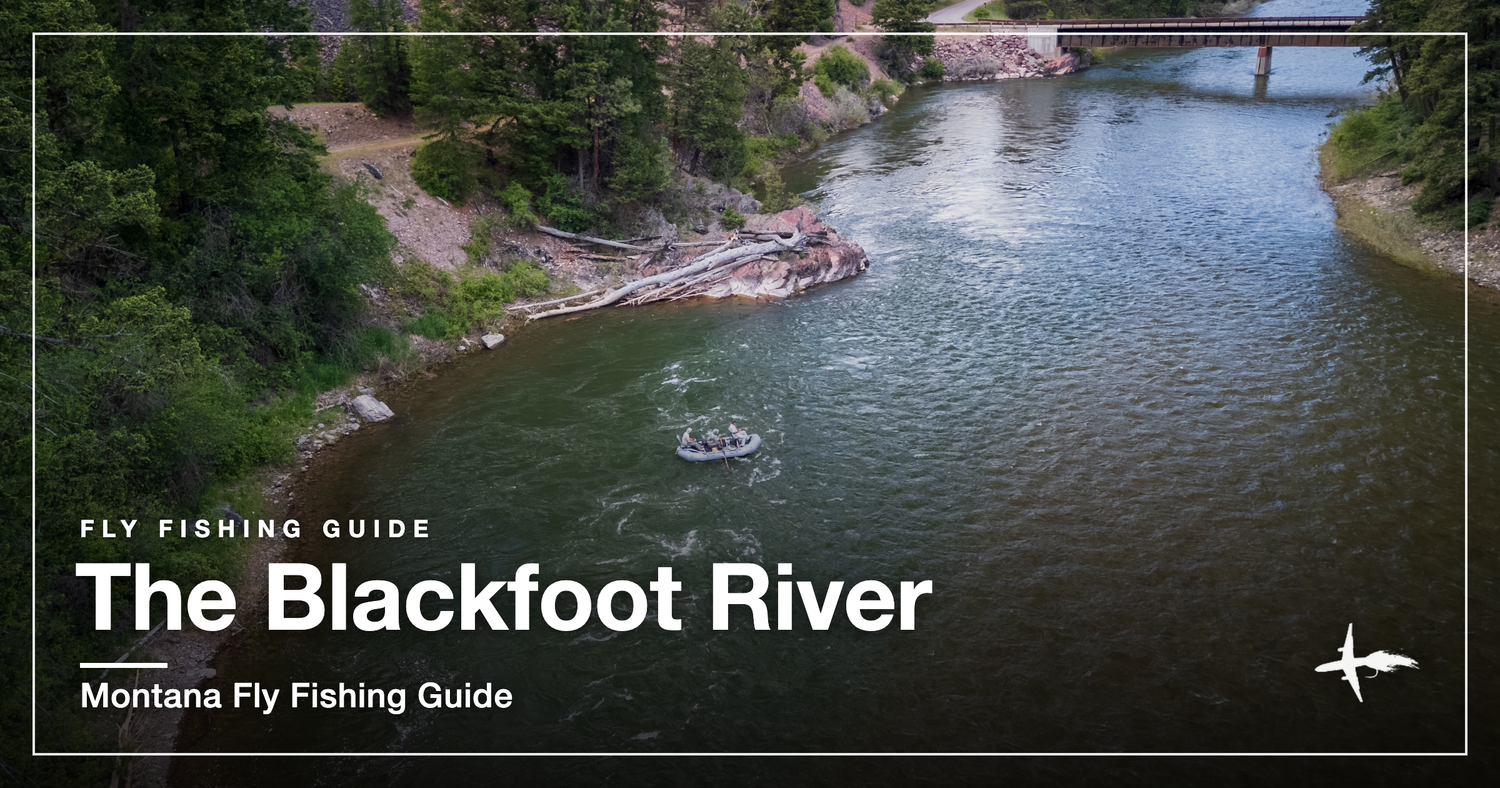
The Blackfoot — some locals call it the Big Blackfoot — is a classic freestone river that runs about 130 miles from the Continental Divide near Lincoln, dropping more than 3,000 feet on its way west to meet the Clark Fork near Missoula. The valley was carved by the cataclysmic draining of glacial Lake Missoula, and you can still feel that power: deep emerald pools, boulder-strewn pocket water, long riffled runs, and towering canyon walls through ponderosa forest.
Most anglers and guides focus on the water between Ovando up top and Bonner down near the Clark Fork confluence. The upper twelve miles — the Box Canyon — is the postcard float, holding the highest density of the biggest browns, rainbows, and cutthroats in the system (mostly float-only, thanks to steep walls and limited access). The Blackfoot is one of Montana’s twelve Blue Ribbon rivers, and a true wild-trout fishery: every fish is naturally reproduced, not stocked.
The Trout: a Four-Species Grand Slam
The Blackfoot is one of the rare rivers where you can land a “Grand Slam” in a single day:
- Westslope cutthroat (native) — the heart of the river. Thanks to restrictive regulations and restoration work since 1990, native westslope have climbed from under 3% of the trout population to more than a third of it — a real conservation success you’re part of when you fish here.
- Rainbows and browns — healthy, wild, and big. Rainbows and browns to 25 inches are not unheard of; the average fish runs a respectable 12–18 inches.
- Bull trout (native, ESA-protected) — the river’s giant, actually a char, pushing 40 inches at the top end. They are a threatened species and you cannot fish for them on purpose — targeting them is unlawful. Every so often one eats a streamer meant for a brown; if that happens, treat it like the treasure it is, keep it wet, and let it go.
Best Seasons: When to Fish the Blackfoot
The season runs roughly April through October — but here’s the honest truth Jake will tell you: the Blackfoot is the coldest river in the Missoula area, so it’s the last to turn on each year. March and April offer brief windows, but they’re often better spent on other Missoula water. May is usually blown out with runoff. Prime time is mid-June through mid-September — and because those cold flows hold up in the heat, August, when other rivers wilt, is when the Blackfoot really shines.
The Blackfoot River Hatch Calendar (Month by Month)
The Blackfoot has one of the strongest insect populations in Montana. Here’s what’s coming off, and what to have tied on:
| Month | What’s hatching | Go-to flies |
|---|---|---|
| March–April | Skwala stoneflies, Blue-Winged Olives, March Browns, midges (pre-runoff dry-fly windows on warm afternoons) | #8–10 Skwala or Chubby Chernobyl, BWO |
| May | Runoff — high, off-color water; tough fishing | Wait it out / fish elsewhere |
| Mid–late June | Salmonfly hatch (one of the best and longest in the state), Golden Stones, Green Drakes, PMDs, Yellow Sallies | Big foam salmonfly & golden stone dries, dry-dropper |
| July | Golden Stones, caddis, Yellow Sallies, PMDs, the tail of the salmonflies | Golden stone dries, caddis, PMDs |
| August | Hoppers & terrestrials, the unique Spruce Moth hatch, lingering golden stones | Hoppers, ants, beetles, hopper-dropper |
| September | Hoppers winding down, PMDs, first fall mayflies | Hoppers, PMDs, attractors |
| October / Fall | BWOs, October Caddis, Trico, Mahogany & Hecuba — the river turns on for big fish | BWO, October Caddis, Trico |
Flies & Tactics
If you can time it, the salmonfly and golden stone hatch in June is the Blackfoot at its best. On my first float with Jake — Corrick’s down to Johnsrud, about eleven miles — we hit it perfectly. We fished a big foam stonefly up top with a nymph dropper Jake called a “Turd,” and a passing rain shower had the fish looking up. I watched a 20-inch brown come clean out of the water to eat a golden stone dry; it ran us a few hundred yards downriver before we got it in the net. That’s the Blackfoot in June.

When the bugs aren’t up, the Blackfoot is a fantastic streamer river for big browns — throw tight to the bank, keep the fly swimming, and hang on. Come August it’s hopper season: big terrestrials, bigger eats. Whatever the month, a dry-dropper and a well-swum streamer will cover most days.
Where & How to Fish It
Float fishing is the way to experience the Blackfoot — it’s deep and fast enough that wading is impractical on most of it (there are wade options up high, from Ovando toward Lincoln). Guides run rafts or drift boats depending on flows and stretch. For the scenery-and-big-fish combo, the Box Canyon is the one. The river is Class I public-access water from Cedar Meadow down to the Clark Fork, so there’s plenty of legal water — just respect access rules and private land.
Gear for a Blackfoot Float
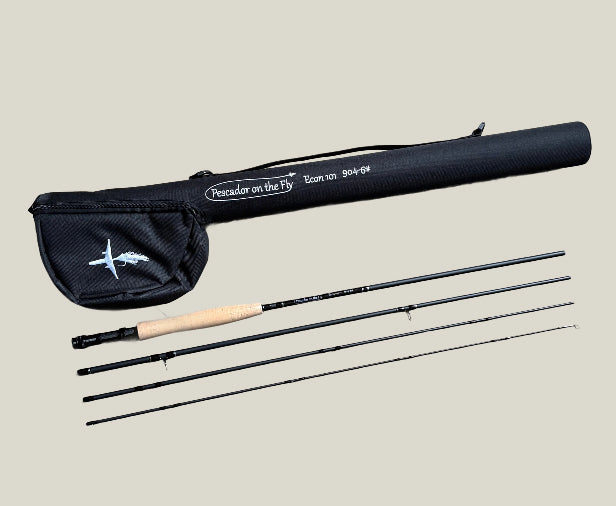
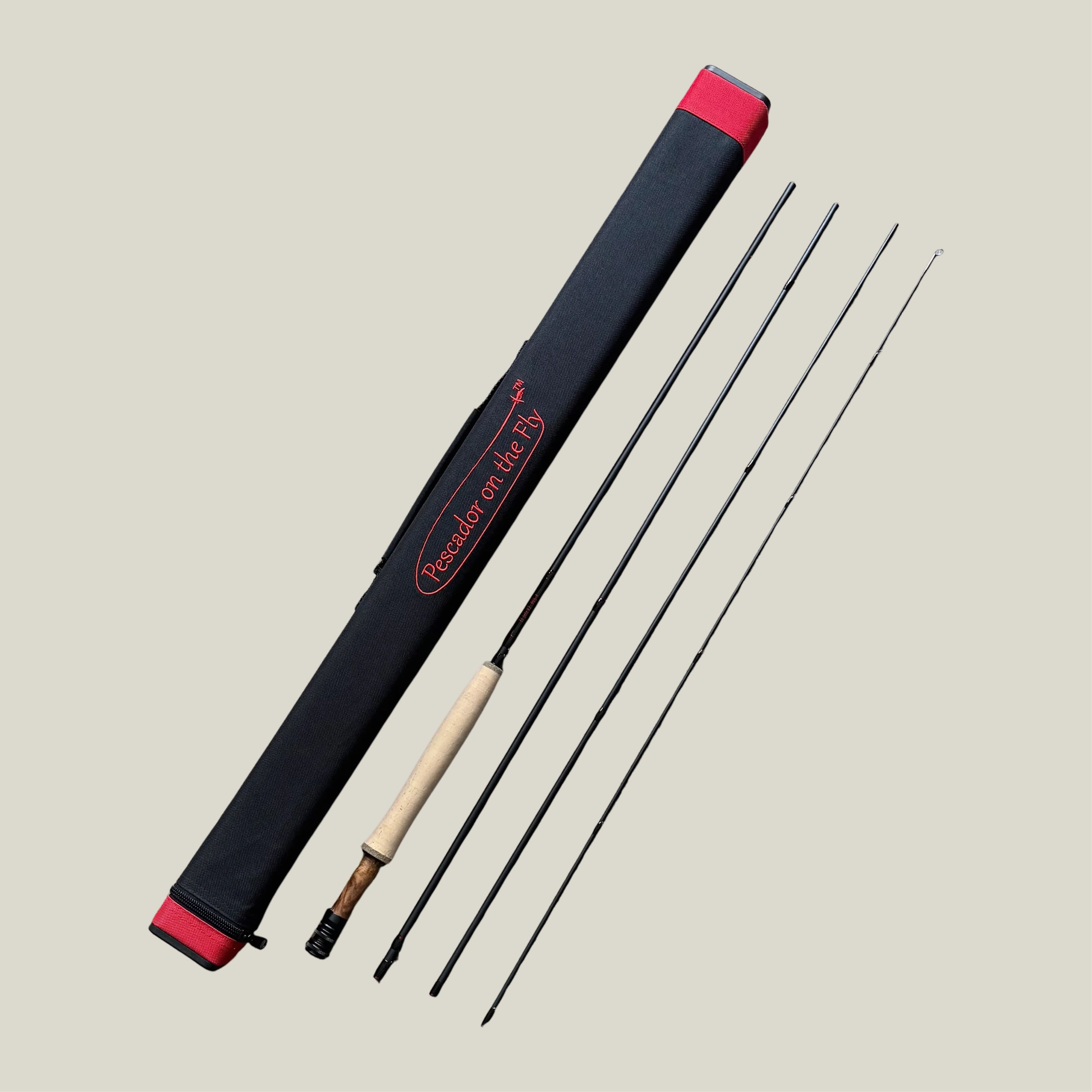
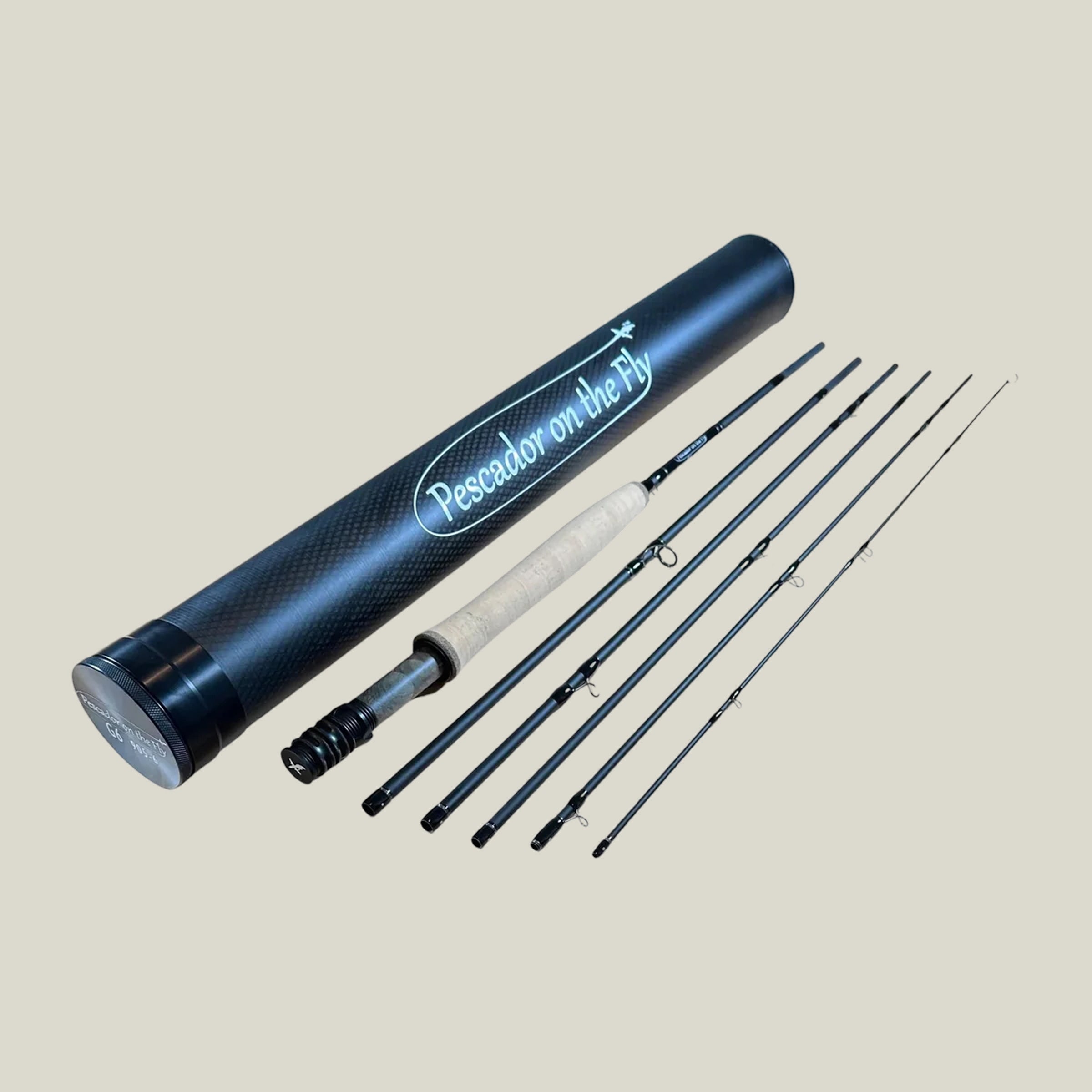
A 5- or 6-weight handles the dry-dropper and hopper fishing; step up to a 7- or 8-weight for streamers and the big browns. Because I’m usually flying into Missoula, I fish our El Rey G6 six-section travel rods — they break down to fit a carry-on and cast like a four-piece, so my whole quiver clips into a backpack with no gate-agent drama. On the Blackfoot I’ve fished the G6 5-weight for the dry-dropper and a 7-weight for streamers.
Conservation & Regulations
The Blackfoot’s comeback is real, and the regulations protect it: catch-and-release for cutthroat and brook trout, and bull trout are fully protected — you can’t fish for them. In hot, dry summers, watch for Montana FWP “hoot-owl” restrictions (no fishing 2 p.m. to midnight) that protect stressed trout. Handle every fish quickly and keep it wet, and you’re helping keep this river what Maclean saw.
Our Days on the Blackfoot
Want the real trip reports behind this guide? Read about floating the Big Blackfoot near Missoula, a day on the Blackfoot with my son, and our streamer day chasing big browns.
Fish It with a Guide
If you’re heading to Missoula, do yourself a favor and book a day with Jake Hensley — Missoula Fly Guy (@missoulaflyguy). He taught me this water, he’s as good on the oars as he is funny in the boat, and there’s no better way to learn the Blackfoot. Tight lines.


Leave a comment
All comments are moderated before being published.
This site is protected by hCaptcha and the hCaptcha Privacy Policy and Terms of Service apply.