




A backpacking fly rod has one job a normal rod does not: it has to disappear into the pack on the walk in and come out fishing the same as it went in. The airline version of this question, whether the tube fits inside a carry-on, is covered in our best travel fly rod guide. This one is about the trail: pack height, weight budget, the tube riding inside or strapped outside, and what line weight makes sense when the water at the end of the hike is a small creek or a lake above the trees. We build the El Rey G6, a six-section rod made for exactly this, so we use its real numbers throughout. Every figure below comes straight off the product listing it belongs to.
What makes a fly rod a backpacking fly rod?
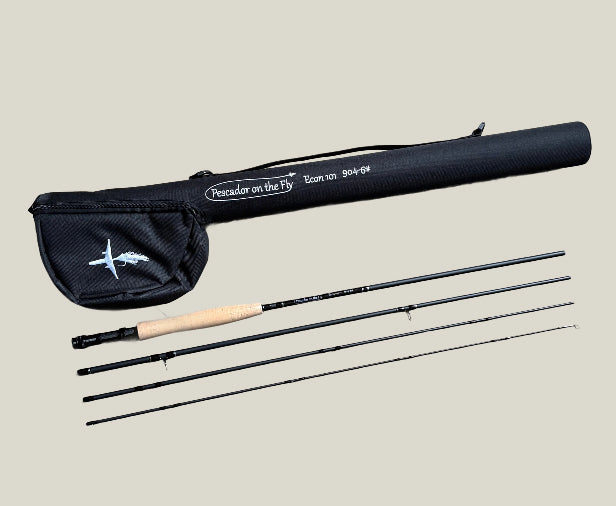
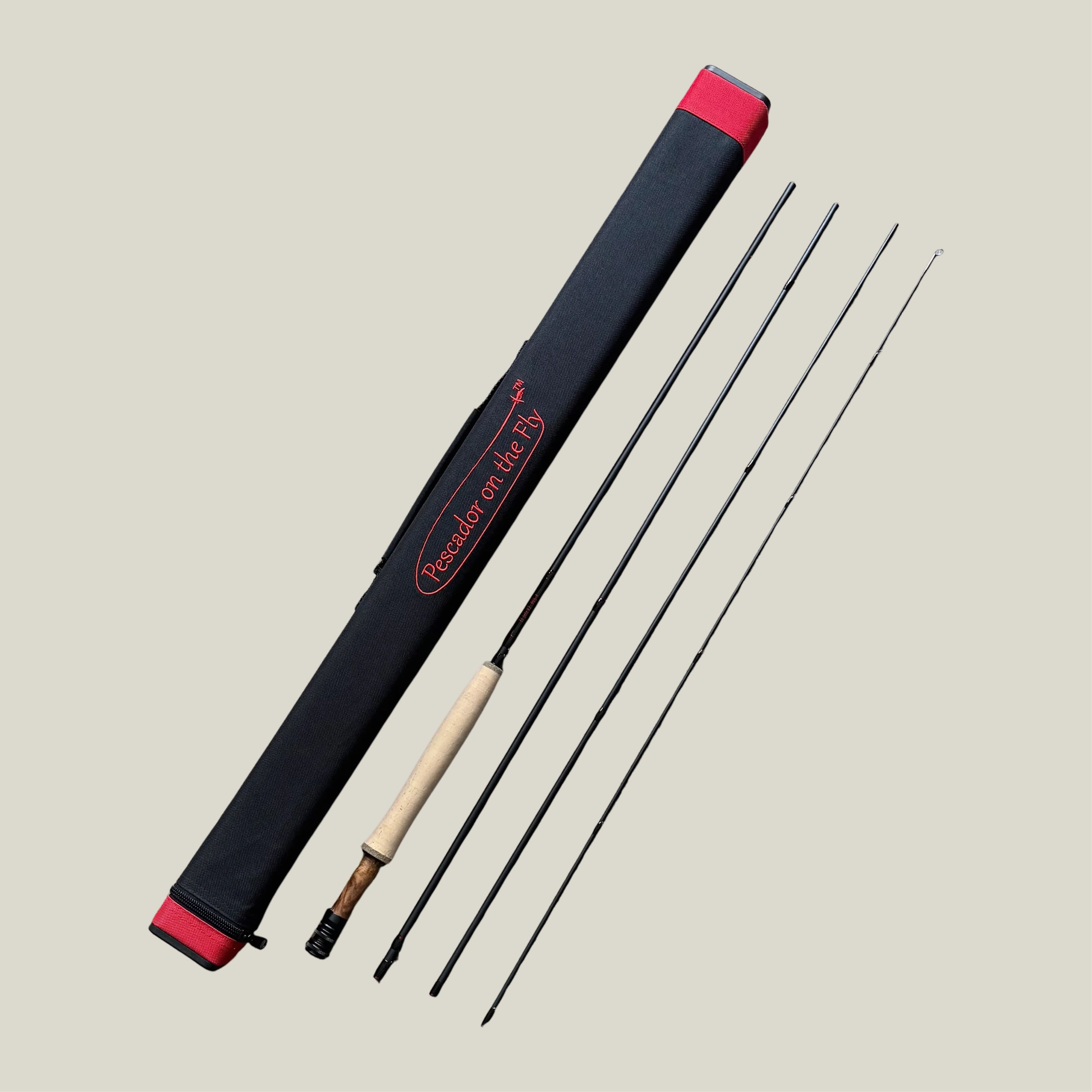
Packed length, and almost nothing else. A 9 foot rod is 9 feet no matter how many sections it comes in. Section count changes the tube length, and the tube is what has to fit your pack. Our 4-section 9 foot rods list tubes of 30.5" (El Rey G4 5 weight) and 31" (Econ 101 5 weight). Those are fine numbers for a truck and a boat ramp. They are awkward numbers for a pack.
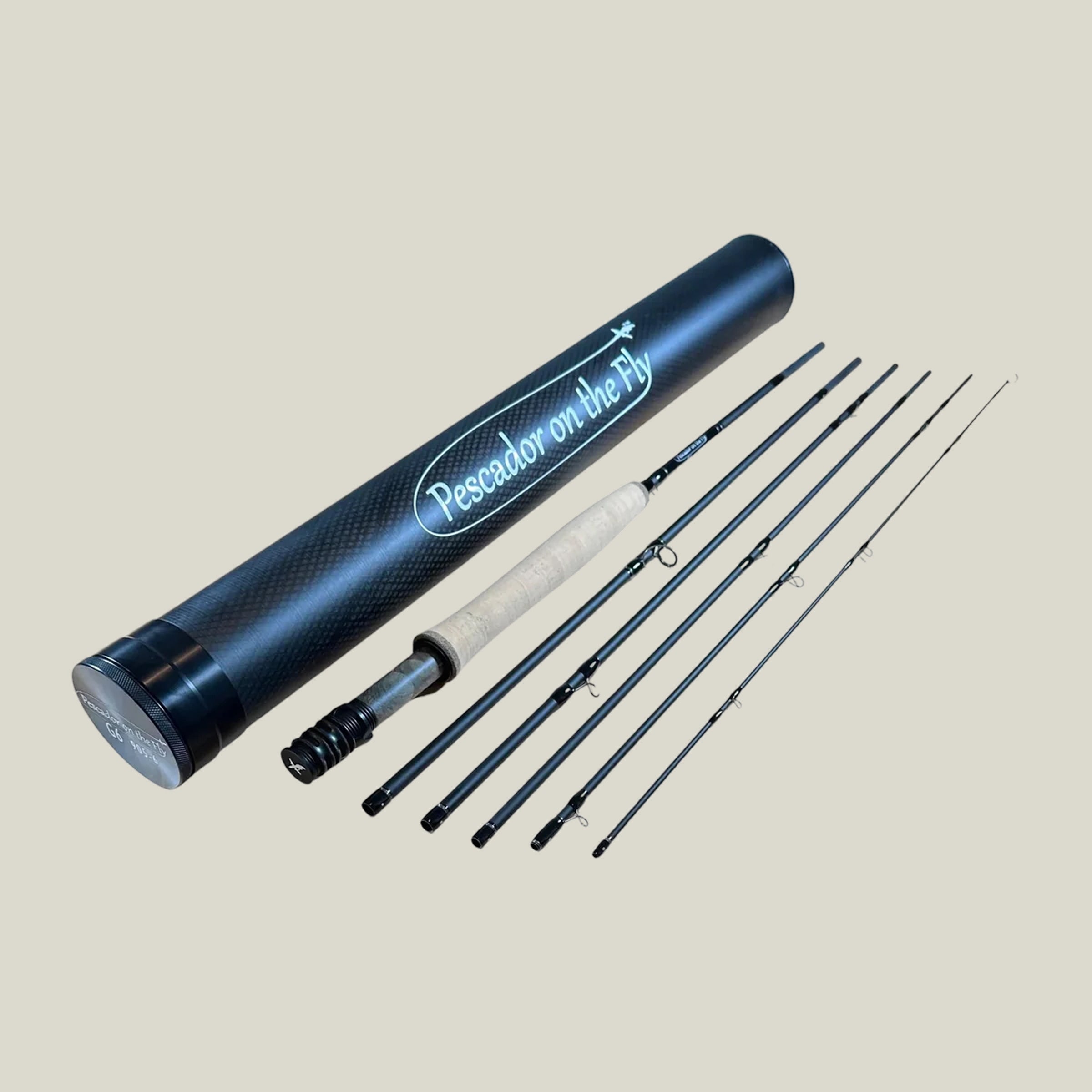
Build the same rod in six sections and the tube gets short enough to go inside the pack instead of on it. That is why the backpacker question and the "6 piece fly rod" question are the same question.
Why a 6 piece fly rod fits a pack when a 4-piece does not
Here are the tube lengths as they appear on each El Rey G6 listing, next to the two 4-section rods for comparison. Every six-section rod ships in a carbon fiber travel tube.
| Rod | Sections | Tube length (from the listing) | Rod weight (from the listing) |
|---|---|---|---|
| El Rey G6 7' 2 weight | 6 | 17.5" | approx. 2.2 oz |
| El Rey G6 7'6" 3 weight | 6 | 18.5" | approx. 2.4 oz |
| El Rey G6 8'6" 4 weight | 6 | 20.25" | approx. 2.6 oz |
| El Rey G6 9' 5 weight | 6 | 21.25" | approx. 2.8 oz |
| El Rey G4 9' 5 weight | 4 | 30.5" | approx. 2.9 oz |
| Econ 101 9' 5 weight | 4 | 31" | approx. 3.4 oz |

Notice the rod weights. A six-section rod is not heavier than the equivalent 4-piece in our lineup; the G6 5 weight lists lighter than the G4 5 weight. And the G6 casts like a 4-piece. Modern ferrule technology closed that gap, so you are not trading casting feel for a shorter tube.
Inside the pack or strapped outside?
Inside, if the tube fits. A tube strapped to the outside of a pack catches on every branch, is the first thing to hit rock when you set the pack down, and changes your balance on a scramble. Inside the pack it is protected by everything around it and you stop thinking about it.
To know if it fits, measure the inside of your pack's main compartment from the bottom to where the lid closes and compare that to the tube length on the rod listing. The tube goes in vertically along the back panel, next to the frame or the sleeping pad. If your pack comes up short, angle the tube across the compartment or pick the shorter rod: the 7'6" 3 weight tube is 18.5" and the 7' 2 weight tube is 17.5", per their listings.
The weight budget
Here is what we can say and what we cannot. The rod weights above are the approximate numbers from each listing, without the reel. We do not publish a bare reel weight, so we are not going to guess at one; weigh your own reel with line on it before the trip.
The tube is the part people forget, and a hard case is not weightless. For a one-night trip on a good trail, plenty of people leave the tube behind and carry the rod in its cloth sock rolled into a sleeping pad. For a longer trip, or anything off trail, the tube earns its weight, and a short carbon tube costs less than a long one.
Which line weight for alpine lakes and small water?
This is where the backpacker and the airline traveler part ways. Someone flying to a big river or the flats wants a 5 weight and an 8 weight. Someone walking into high country is fishing small creeks, beaver ponds, and lakes above the trees, for trout that are usually not large. That is 3 weight and 4 weight water.
- 2 weight and 3 weight: the small-creek rods. Short casts, small dry flies, light tippet. Our 7' 2 weight and 7'6" 3 weight are short on purpose; a short rod is easier in brush and its tube is the shortest we make.
- 4 weight: our pick if you are buying one rod for the trail. The 8'6" length gives you reach on a lake and still fits a creek, the 4 weight line carries a dry fly or a small nymph rig without effort, and the listing describes it as medium-fast, which is the action you want when a lake wind comes up in the afternoon.
- 5 weight: the do-everything option. If the same rod has to fish your home river and the backcountry, take the 9' 5 weight. It gives up a little delicacy on a tiny creek and gains it back on a windy lake.

If you are unsure between two weights, our fly rod weight guide walks through every weight by water and species. For the high country, when in doubt go lighter. The fish are smaller than you think and the wind is not as bad as you fear.
Reel and line pairing
Each El Rey G6 listing names its matching reel, and that is the pairing we would use rather than guessing off the line weight:
- El Rey G6 7' 2 weight: El Jefe 2/3 reel, spooled with 2 weight line.
- El Rey G6 7'6" 3 weight: El Jefe 2/3 reel, spooled with 3 weight line.
- El Rey G6 8'6" 4 weight: El Jefe 3/4 reel, spooled with 4 weight line.
- El Rey G6 9' 5 weight: El Jefe 5/6 reel, spooled with 5 weight line.
The El Jefe reels are machined from aircraft-grade 6061-T6 aluminum with a fully sealed disc drag, and they come pre-spooled with backing and a weight-forward floating line. Bought with the rod as a combo, the reel saves you $100 off the two bought separately; the current combo price is on each rod page.
What actually goes wrong on the trail, and how a six-section rod handles it
Two things, in our experience.
Grit in the ferrules. Dust, sand, and lake silt get into rod joints on any trip where the rod is set down on the ground. Wipe the male ferrules on your shirt and seat them with a slight twist. If a joint does lock up at the end of the day, we wrote up five ways to get fly rod sections unstuck that do not involve pliers.
The tip section, on the walk. The thinnest part of any fly rod is the tip, and the walk between lakes is where it takes the most abuse if the rod is rigged and carried in hand. A short tube helps here: taking the rod down and putting it back in the pack takes a minute, so you actually do it. With a long tube lashed outside the pack, most people carry the rod rigged the whole way.
Every rod we sell carries our lifetime warranty.
Packing the tube

- Take the rod down dry if you can and wipe each section. Sections go in the cloth sock, sock goes in the tube; never loose sections in a tube.
- Tube goes vertically inside the pack along the back panel, soft things around it. The reel rides in the top of the pack or a hip belt pocket, in its case or wrapped in a buff.
- On a day hike from base camp the rod can stay rigged if the walk is short and open. If it is brushy or long, take it down; a short tube makes that a one-minute job.
What we carry
From the products we actually sell in 2026, with the listing price as of this writing.
- El Rey G6 8'6" 4 weight, $575. Tube 20.25", approx. 2.6 oz. The one-rod answer for the trail.
- El Rey G6 7'6" 3 weight, $575. Tube 18.5", approx. 2.4 oz. For trips that are mostly small creeks and beaver ponds.
- El Rey G6 7' 2 weight, $575. Tube 17.5", approx. 2.2 oz. The shortest tube we make, for the smallest water.
- El Rey G6 9' 5 weight, $600. Tube 21.25", approx. 2.8 oz. When the same rod has to do the river at home too.
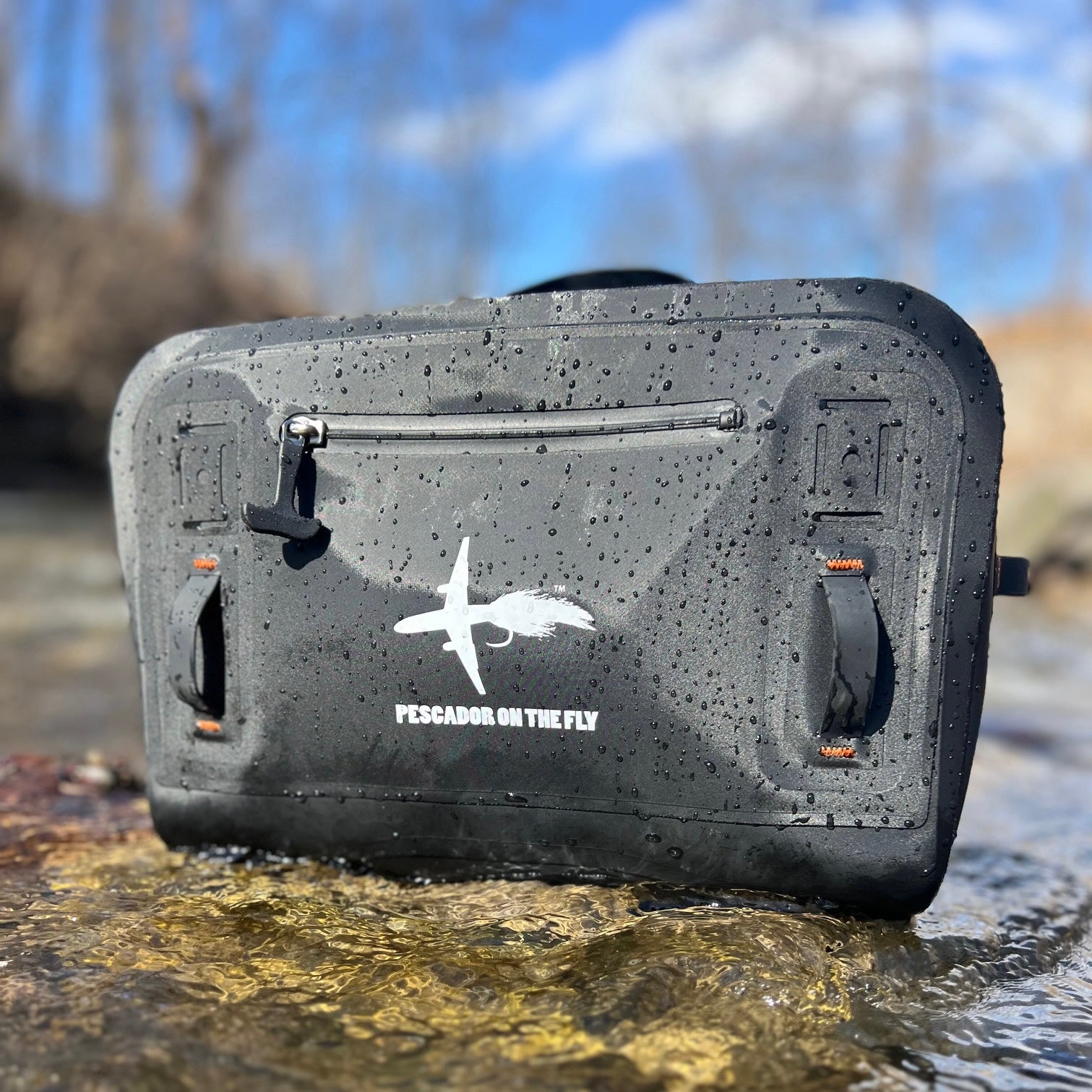
- A RiverVault 2.0 waterproof hip pack for the fishing day itself, or the smaller Versa Pack if the trip is about the miles and the fishing is a bonus.

The full six-section lineup, 2 weight through 9 weight, is on the El Rey G6 series page; for a pack, the four rods above are the ones that matter.
When a 4-piece is fine
Plenty of the time, and we would rather say so than pretend otherwise. If your trips are short walk-ins on an open trail, if you fish from a base camp you drove to, or if you already own a 4-piece you love and the tube rides outside the pack without bothering you, keep fishing it. A 4-piece rod is a normal rod and it catches every fish a six-section rod catches. Our El Rey G4 and El Jefe v2 are 4-piece rods and we fish them constantly.
The six-section rod earns its place when the pack is full, the trail is long or brushy, or the trip is more than a night. The best backpacking fly rod is the one that is in the pack, and a shorter tube is how it gets there.
Backpacking fly rod questions we get
What is the best fly rod weight for backpacking? A 3 weight or 4 weight for most alpine lakes and small streams. A 4 weight is the better single choice because it handles a lake wind; a 3 weight is better if the trip is all creeks. A 5 weight works if the rod also has to fish bigger water at home.
How long is a 6 piece fly rod tube? It depends on the rod length. Our El Rey G6 tubes run from 17.5" for the 7' 2 weight to 21.25" for the 9' models, according to each product listing. Our 4-piece 9 foot rods list 30.5" to 31" tubes.
Should a fly rod tube go inside or outside the pack? Inside whenever it fits. It is protected, it does not snag, and it does not change your balance. Measure your pack's main compartment against the tube length on the listing.
Does a 6 piece fly rod cast as well as a 4-piece? Built with modern ferrules, yes; the El Rey G6 casts like a 4-piece. The number of sections changes the tube length, not the rod length or the line weight.
If there is an airport before the trailhead, the travel rod guide linked at the top covers the carry-on side of the same rod. Tight lines.


Leave a comment
All comments are moderated before being published.
This site is protected by hCaptcha and the hCaptcha Privacy Policy and Terms of Service apply.