



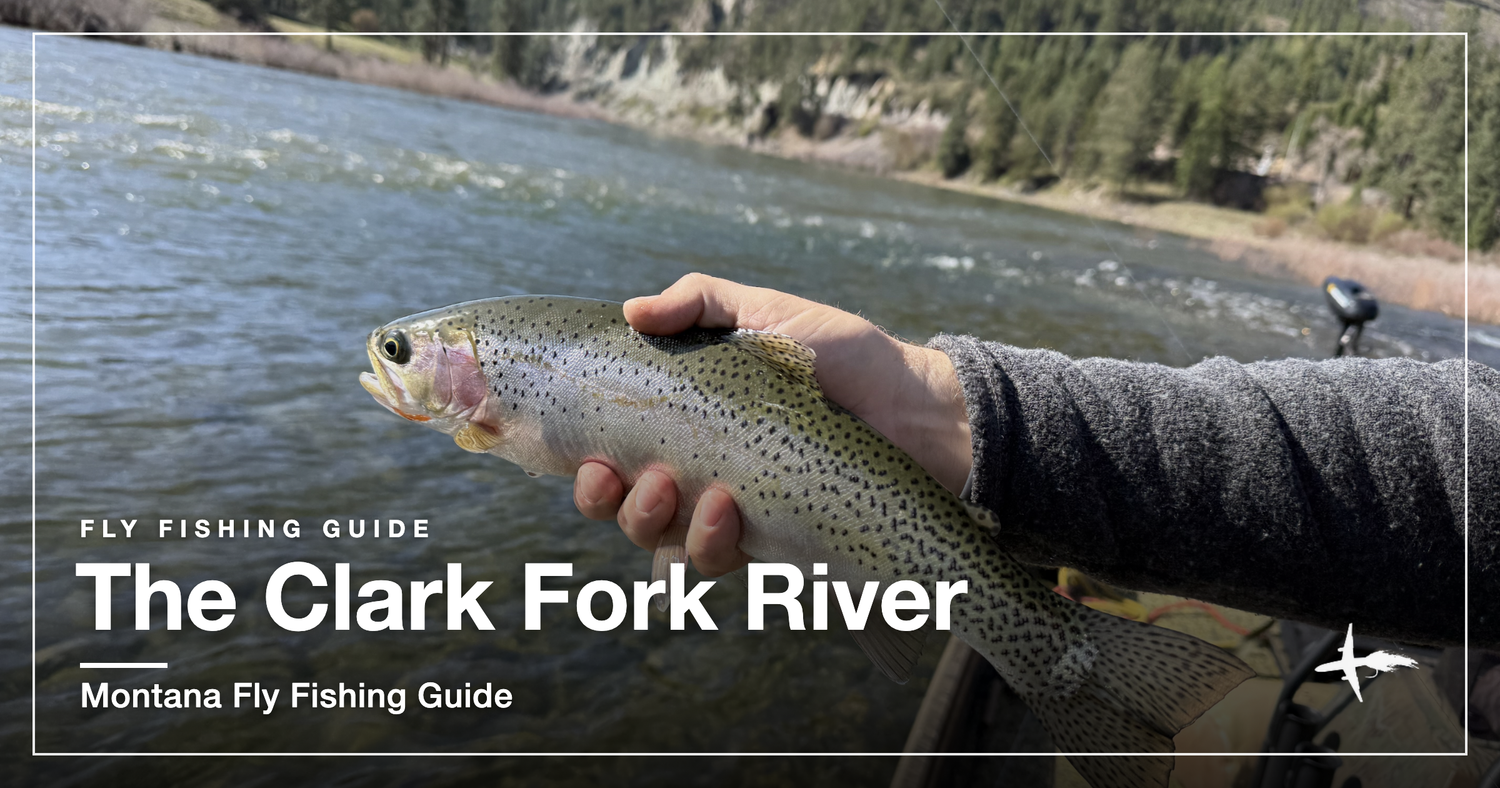
If you spend enough time fly fishing the Clark Fork River, you start to appreciate that it's really several rivers wearing one name. Montana's largest river by volume, the Clark Fork morphs from a tiny S-shaped meadow stream near Anaconda into the biggest freestone river in the state over more than 280 miles to the Idaho border. What ties it all together is a comeback story: the upper river spent the early 20th century as a dumping ground for copper-mining waste out of Anaconda and Butte, sat on the list as a Superfund site for years, and only turned the corner when cleanup gained real momentum with the $150 million removal of the Milltown Dam. Today it plays host to a lot of big brown and rainbow trout, which is a better ending than this river had any right to expect.
The Clark Fork at a glance
The Clark Fork begins at the confluence of Warm Springs Creek and Silverbow Creek near Anaconda, about 90 miles upstream of Missoula, and flows west, gathering Rock Creek, the Blackfoot, and the Bitterroot along the way. Missoula is the hinge point that splits the river into two very different fisheries.
The upper Clark Fork (upstream of Missoula) starts as wade-only water at the headwaters, then quickly grows into a floatable, meandering brown trout stream — tight willow banks, meadows, and deep undercuts, the classic brown-trout arena that loves a streamer and a hopper. It narrows and thins out below Drummond, but Rock Creek is the first major drainage to come in, and below its convergence near Beavertail State Park the habitat and fish numbers improve significantly.
The lower Clark Fork (downstream of Missoula) is a different animal. By the time it runs through town it has gathered all its water and become a large freestone river with slow, gliding currents and mostly adult rainbows. West of Missoula it's a glossy, wide rainbow fishery living on mayflies, stoneflies, and grasshoppers. Below the Bitterroot confluence it turns into a big Montana river — steep sides, a deceptively fast current, boat water through and through.
Species present
The Clark Fork holds wild rainbow trout, brown trout, and westslope cutthroat, plus mountain whitefish and, in places, bass, northern pike, and perch. Where you fish shapes what you catch. On the upper river, brown trout dominate the catch even though rainbows and cutthroat are present — fish numbers up there are lower, but the browns can be worth the hunt. On the lower river, rainbows, cuttbows, and cutthroat pod up to feed on prolific mayfly and caddis hatches that start in June and run well into October.
Average trout run 12 to 18 inches. On the lower river the average climbs to 16–17 inches, with a real shot at a fish over 20 inches on a daily basis. A 2023 Montana Fish, Wildlife & Parks survey put some sections at an estimated 3,000 trout per mile — one of the highest trout-per-mile counts in the state. It doesn't fish easy every day, but the fish are there.
Best seasons
There's no single "best" season on the Clark Fork so much as a right season for what you want to do. Spring (March through May) brings the first dry-fly action of the year — skwalas, BWOs, march browns, grey drakes — and the lower river carries the densest springtime skwala population in the area. Summer settles into terrestrials, PMDs, and caddis, and the lower Clark Fork stays cooler than a lot of nearby rivers in the July and August heat, which makes it a smart hot-weather option. A fair number of Missoula guides will tell you fall is prime time, when the longer, slower pools get trout to pod up and eat mayflies with abandon.
The one timing note that governs everything: the Clark Fork is typically the last river near Missoula to clear after spring runoff, because every stream in the drainage ends up here. Most years that clearing happens around May and June, and conditions can change daily while it's dropping. That muddy, dropping window is also when big browns eat streamers on the upper river, so it's not lost time — just plan around it.
Hatch calendar for fly fishing the Clark Fork River
Hatches move with water temps and clarity, so treat this as a general rhythm rather than a calendar you can set a watch to. Here's roughly how the season unfolds and what I'd tie on for each window.
| Month(s) | Primary hatches / insects | Suggested fly |
|---|---|---|
| Late Feb–March | Skwala stonefly (first major dry-fly bug), early BWOs | Bullet head / CDC bullet head skwala; Para Adams BWO |
| March–April | Skwalas, BWOs, march browns, grey drakes | Chubby Chernobyl / stimulator (skwala); Sparkle Dun BWO |
| Late April–May | Skwala peak (lower river ~end of April), Mother's Day caddis | Foam skwala; elk hair caddis, evening |
| May–June | Spring runoff / off-color water; big browns on the move (upper river) | Sparkle minnow, wooly bugger, kreelex |
| June–early July | Salmonflies (upper river Rock Creek–Missoula & Alberton Gorge only), golden stones, green drakes | Golden Stone Nymph 4–10; Green Drake Emerger / Purple Haze |
| July–August | PMDs, caddis, tricos (morning spinner falls), terrestrials | Hopper 4–10; Olive Sparkle Dun 12–16; Hare's Ear nymph 12–16 |
| Late Aug–September | Hecuba, mahogany duns, BWOs; hoppers fading | Mahogany / Para Adams; ant & hopper on warm afternoons |
| October–November | BWOs, mahoganies; fall streamer bite | Marabou Cripple BWO; sparkle minnow / wooly bugger |
Flies & tactics
Spring. This is dry-fly season when the skwalas are on. On the lower river the hatch doesn't really turn on until early April and generally peaks around the end of the month — when it does, flying skwalas descend like a mini salmonfly hatch and you can spot fish busting dries from hundreds of yards off. Fish foam skwalas and bullet heads up top, Pat's Rubber Legs and double-bead stones underneath, and lean on Para Adams and Sparkle Duns for the BWOs. Mother's Day caddis come off in numbers on both stretches, especially toward evening.
Summer. Overall the Clark Fork doesn't have a great salmonfly hatch — the exceptions are the upper river from Rock Creek to Missoula and the Alberton Gorge, and those upper-river salmonflies are usually the first in the area to pop, buying you a week or two of big-bug fishing while other rivers wait. As water drops and clears, PMDs and caddis take over the daily rhythm. When summer heat is fully on, terrestrials are the play — standard hopper imitations in sizes 4–10 from mid-July through September bring good fish, and morning trico spinner falls give you rising fish to cast to. Nymph fans do well on a Hare's Ear in 12–16.
Fall. A lot of guides call this the best window. Trout pod up in the longer, slower pools and eat BWOs and mahoganies — it's not unusual to find 40–50 fish rising in one place. Terrestrials fade with the cool temps as the mayflies take over; hecuba, mahogany, and BWO can show as early as late August and run through October, into November when the weather cooperates. Fall is also the streamer season here: we prefer smaller streamers — sparkle minnows, wooly buggers, kreelex — worked into holes and good holding water, which is how a lot of the big browns and rainbows come to hand.
Where to fish & access
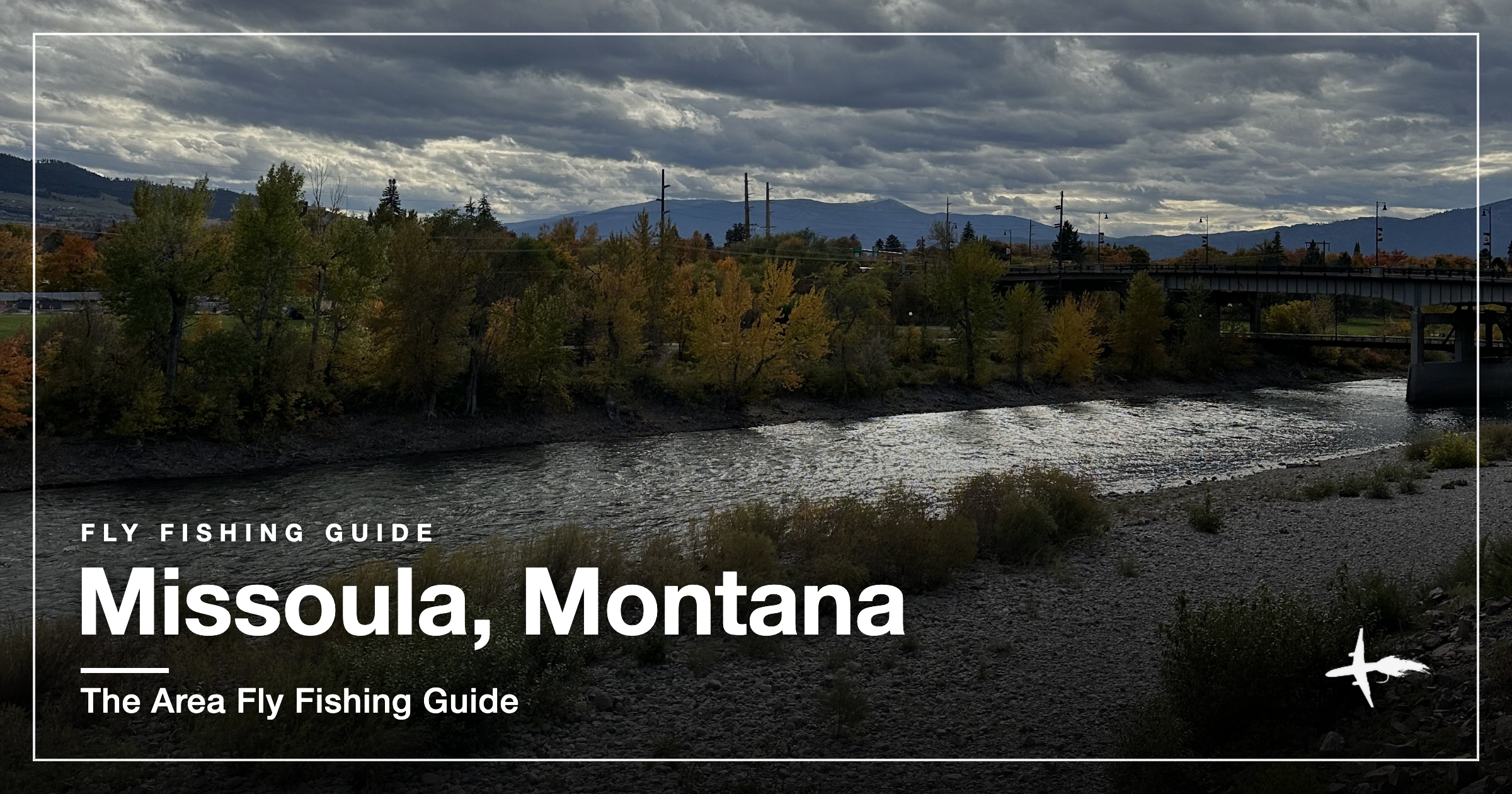
Access is easy by Montana standards: Interstate 90 roughly parallels the river its entire length, giving you frequent (if occasionally noisy) access points. You can wade the Clark Fork from Warm Springs down to Deer Lodge, and where the river braids through downtown Missoula it opens into very fishable side channels — the Kelly Island area is one of the most popular wade spots in town, and some of the best below Garrison is right there in the city.
Float fishing is the heart of it. From Clinton down to the Milltown Dam in Missoula you can fish from a canoe, raft, or drift boat, and that stretch gets fed by Rock Creek and the Blackfoot, which boosts the flow and the fishing. There are roughly 124 miles of popular floats, and the water ranges from serene flats to genuine whitewater — about 35 miles below Missoula, the Alberton Gorge can hit Class IV depending on flows, so know the section before you launch. If you're new to the river, that's a strong argument for a day with a guide before you rig your own boat.
Gear for the trip
The Clark Fork rewards a rod that covers ground. Between skwala dries, hopper-droppers, and the occasional streamer chuck for browns, most of my Clark Fork days live on a 9-foot 5- or 6-weight — enough backbone to turn over a Chubby Chernobyl in a Missoula-valley breeze, soft enough to protect a light tippet during a fall BWO feeding pod.
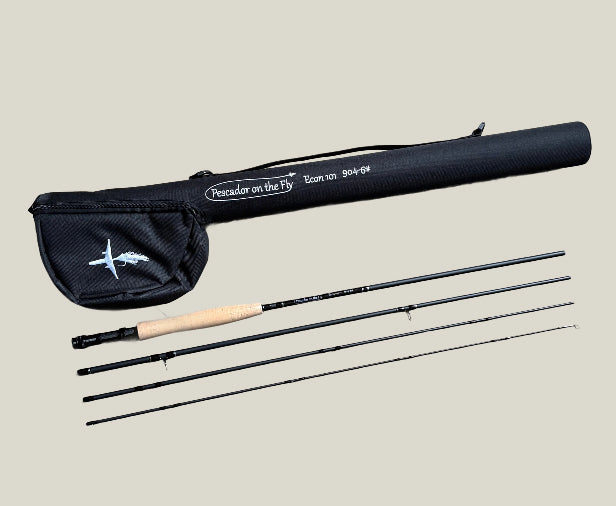
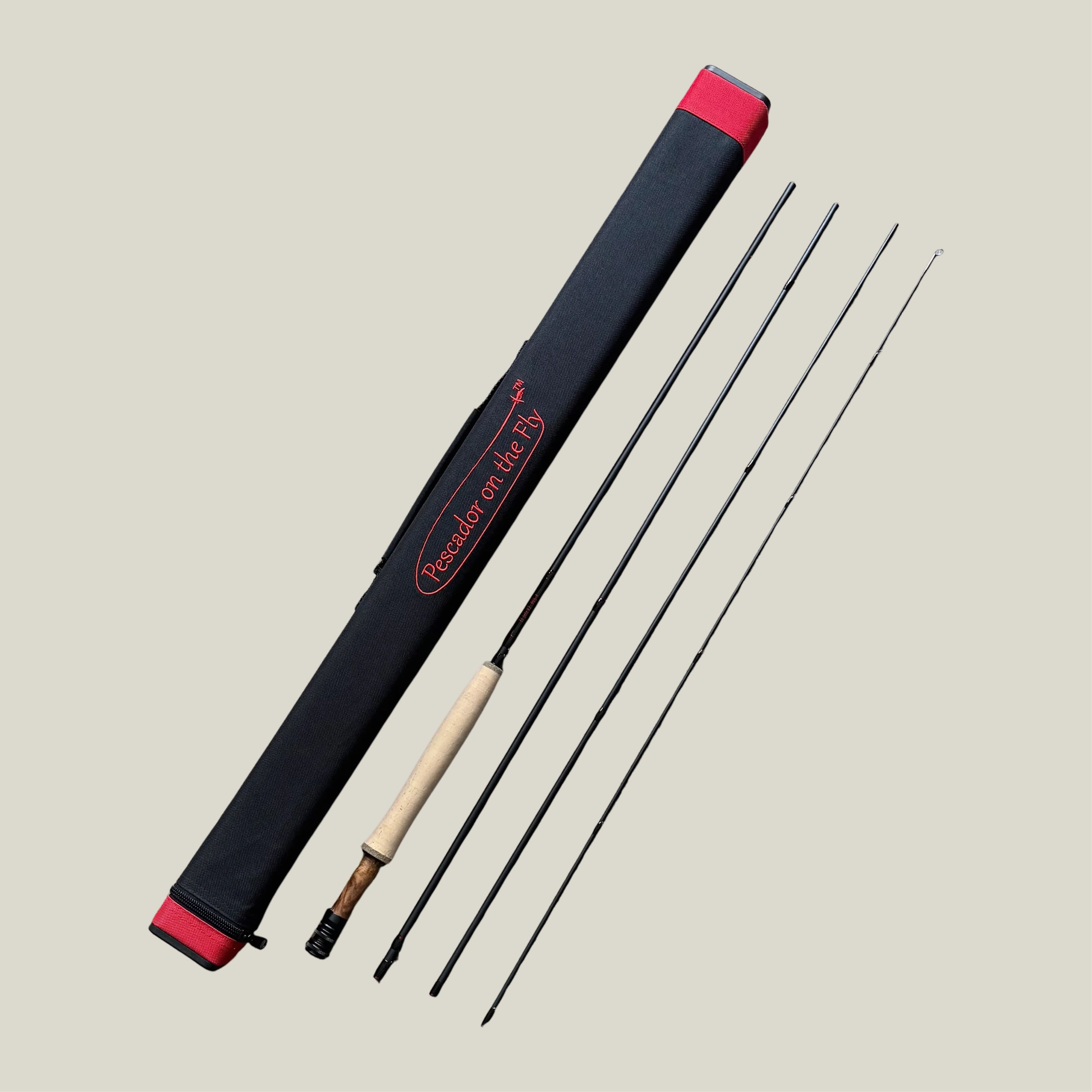
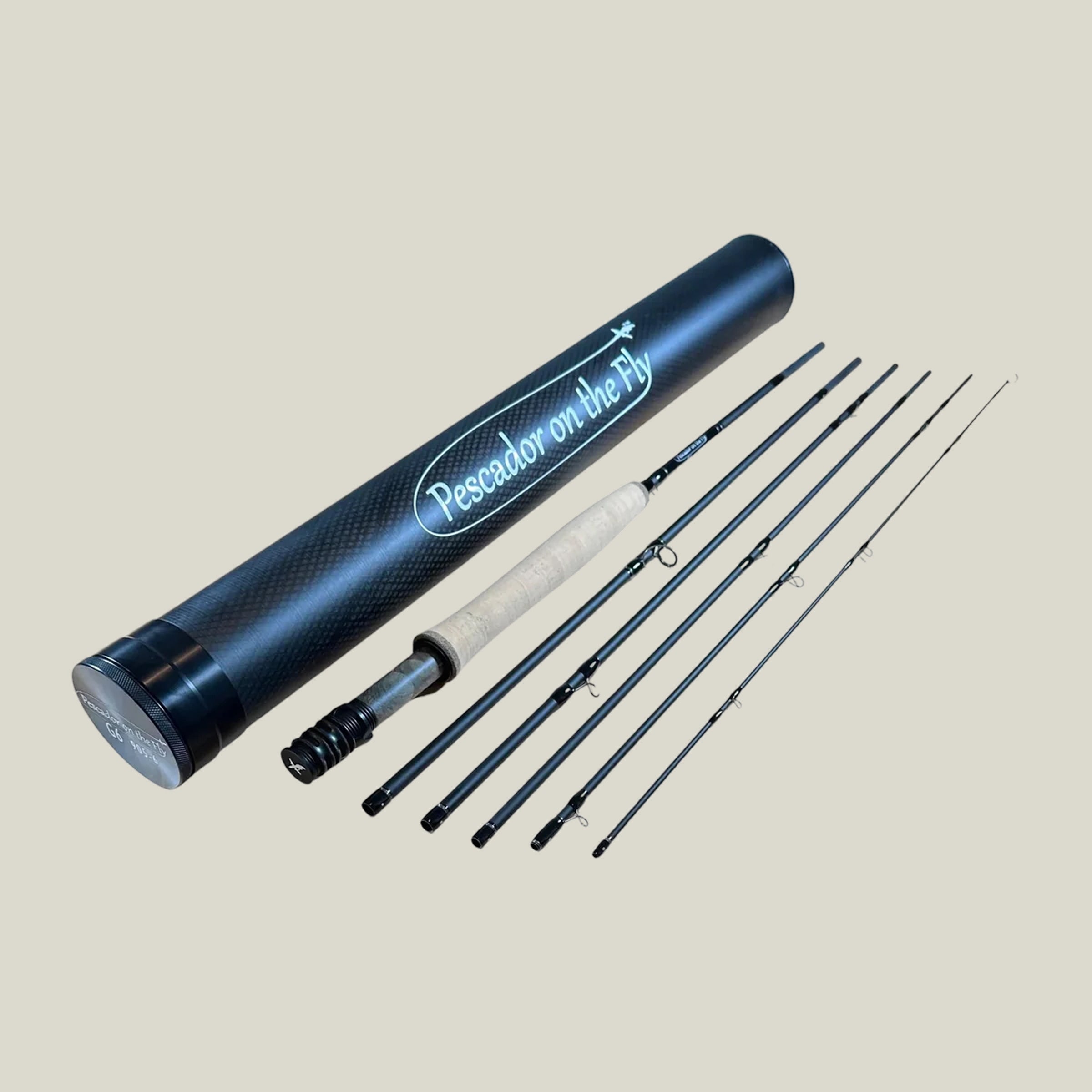
The one piece of gear I'll flag specifically is travel. If you're flying into Missoula, checking a rod tube is a gamble I've stopped taking. Our El Rey G6 travel-rod series is the six-section rod I've been fishing on trips like this precisely because it breaks down small enough to carry on — and, more to the point, it casts like a 4-piece instead of feeling like a novelty. I've thrown it on the lower Clark Fork's slow glides and it loads clean; that's the whole test for me, and it passes. The rest of the kit is boring on purpose: a reliable reel with a smooth drag for when a 20-inch rainbow decides to run, floatant, a spare leader or two, and more hopper patterns than you think you'll need.
Our trips on the Clark Fork
We've fished this river across the seasons — skwala mornings on the lower river, hopper afternoons up top, and a few fall days I keep coming back to in my head. Here's where those trip write-ups live.
- Fly Fishing the Clark Fork With My Friend Jake (Missoula Fly Guy)
- Fly Fishing the Lower Clark Fork — Epic Skwala Hatch
- An Unforgettable Afternoon on the Clark Fork River
- April Fly Fishing in Montana — The Clark Fork
- Downtown Missoula Fall Fly Fishing Action, DIY Style
- Cutthroat Trout on the Streamer in Downtown Missoula
- Fall Streamer Fishing on the Upper Clark Fork
- October Streamer Fishing on the Clark Fork
- Three Days in Montana — Lower Clark Fork (Day 1)
- Three Days in Montana — Upper Clark Fork, Big Browns (Day 2)
- Spring Nymphing the Clark Fork Near Superior (Day 1)
- Fly Fishing the Clark Fork Below Missoula in the Rain (Day 3)
- Fly Fishing Montana With My Son — A Father's Day Float on the Clark Fork
Fish it with a guide — Missoula Fly Guy
I'll be honest about where most of this water knowledge came from: Jake Hensley of Missoula Fly Guy (@missoulaflyguy). Jake taught me the Clark Fork — which runs to trust after runoff, where the skwalas actually turn on, how the lower river fishes when the pods set up in the fall. If you want to shortcut the learning curve, the best money you can spend on this river is a day in his boat. Book one at missoulaflyguy.com. Grab your gear from us and put Jake on the oars — he's the guide, we're the outfitter, and on a river with 124 miles of floats and a Class IV gorge in the mix, having both in your corner is how you fish it right.


Leave a comment
All comments are moderated before being published.
This site is protected by hCaptcha and the hCaptcha Privacy Policy and Terms of Service apply.